
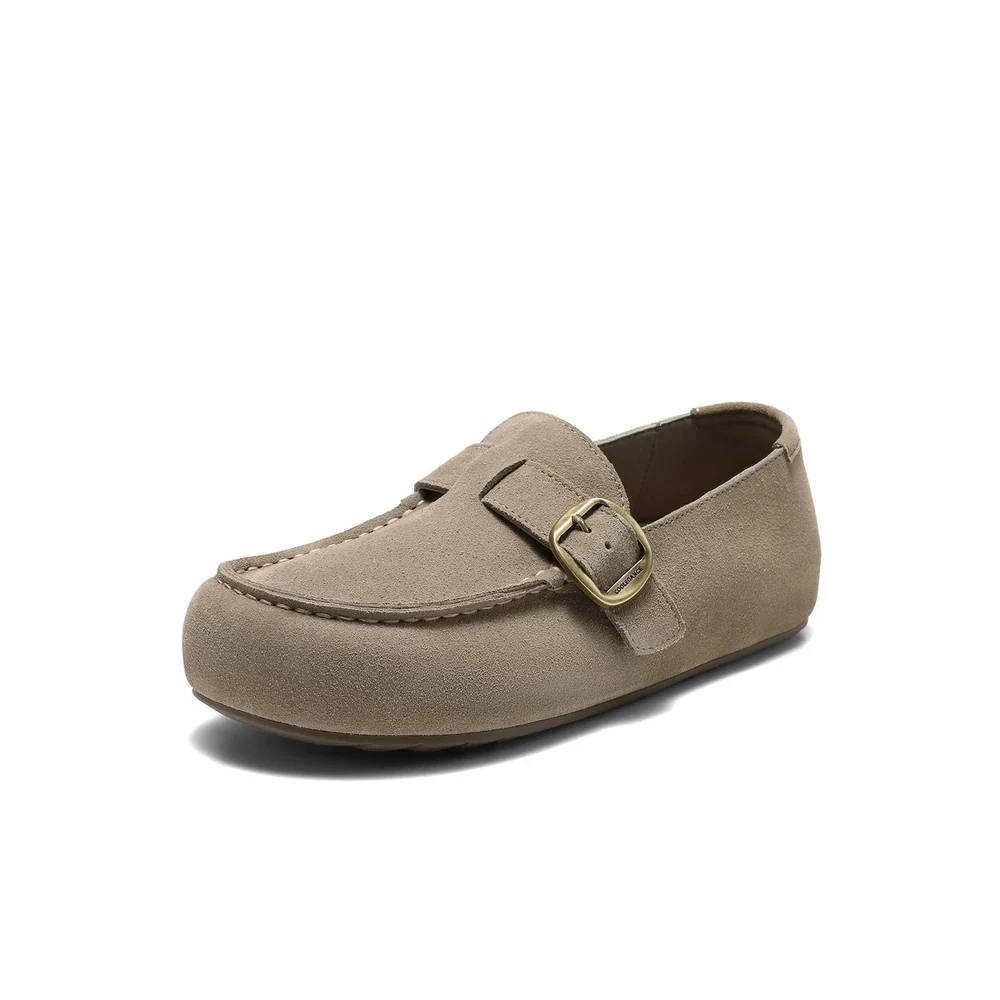
When global footwear brands partner with a professional shoes factory to scale their Spring/Summer and Autumn/Winter collections, few material challenges match the complexity of natural cow suede. While synthetic alternatives offer uniform replication, they lack the tactile warmth, breathability, and premium aesthetic demanded by high-end consumer markets. However, the organic nature of natural leather introduces inherent biological variability. Managing hide heterogeneity, chromium tanning parameters, and dyeing tolerances across tens of thousands of pairs is the ultimate test of an OEM/ODM manufacturer’s technical maturity.
At Heshan City Shark Imperator Footwear, our three decades of manufacturing experience as a specialized export shoes factory have proven that achieving flawless batch consistency is not a matter of chance—it is a rigorous, data-driven engineering discipline. This whitepaper explores the industrial protocols required to eliminate shade variation, stabilize physical performance, and ensure uncompromised quality in large-scale cow suede footwear production.
1. The Anatomy of Hide Heterogeneity: Source Selection and Grading
Natural cow hides are living biological membranes. Factors such as animal age, diet, climate, and regional geography directly influence fiber density, collagen arrangement, and dermal thickness. If unmitigated, these biological variables lead to inconsistent nap texture, uneven dye absorption, and unpredictable elongation rates during lasting.
1.1 Pre-Tanning Selection Protocols
To establish a stable baseline, any tier-one shoes factory must integrate its supply chain directly at the wet-blue selection stage. We enforce strict raw material grading criteria:
- Dermal Density Threshold: Only mature bovine hides with a minimum thickness of 1.8mm to 2.0mm and uniform fiber compaction across the spine and belly regions are selected.
- Flaw Exclusion Rate: Hides exhibiting severe barbed-wire scars, tick marks, or branding defects exceeding 3% of the total surface area are systematically downgraded or rejected.
- Moisture Equilibrium: Wet-blue shipments must maintain an internal moisture content between 18% and 22% prior to retanning to prevent premature fiber collapse.
By standardizing the input material at the molecular level, we reduce baseline structural variance by up to 35% before the leather ever reaches the splitting and shaving drums.
2. Chemical Engineering: Tanning, Retanning, and Fatliquoring Control
The transformation of raw hide into premium cow suede relies heavily on chemical precision. Inconsistent chemical uptake during retanning is the primary culprit behind batch-to-batch stiffness variations and premature nap degradation.
2.1 Chromium III Stability and Retanning Agents
As an established shoes factory, we utilize advanced chromium III tanning complexes combined with synthetic and vegetable retanning agents. To ensure long-term durability and soft hand-feel, our chemical formulation adheres to strict performance metrics:
- Shrinkage Temperature (Ts): Every tanned batch must record a hydrothermal shrinkage temperature >= 100°C, verified via differential scanning calorimetry.
- Fatliquor Dispersion: Natural and synthetic fatliquors are applied at an optimized concentration of 6% to 8% dry weight, ensuring lipid molecules bond evenly to collagen fibers without surface greasiness.
- pH Gradient Control: The neutralization pH of crust leather is strictly maintained between 4.5 and 5.0. Deviations outside this narrow band disrupt anionic dye fixation, leading to blotchiness during subsequent drum dyeing.
3. Precision Colorimetry: Eliminating Shade Variation in Mass Production
Shade variation (batch-to-batch color drift) is one of the most frequent causes of retail returns and brand disputes. Earthy neutral tones—such as warm apricot, sand, taupe, and rich cognac—are notoriously sensitive to minor fluctuations in dye bath temperature, pH, and water hardness.
3.1 Spectrophotometric Quality Assurance
Inside our internal quality laboratory, every shoes factory production lot is scanned using computerized spectrophotometers utilizing the CIE Lab* color space coordinate system:
- Total Color Difference (Delta E Threshold): Our internal standard mandates that any manufactured batch must achieve a total color difference of Delta E <= 0.8 relative to the master approved color swatch. Any batch exceeding Delta E 1.0 is automatically flagged for quarantine.
- Metamerism Index: Dyes are pre-screened under multiple simulated illuminants (D65 daylight, TL84 store lighting, and A incandescent light) to ensure color stability under retail display conditions.
- Dye Penetration Depth: Cross-sectional microscopic analysis is performed on random samples to guarantee a dye penetration depth >= 85% through the dermis, preventing pale backing layers from exposing themselves when the nap is flexed.
4. Physical Mechanical Testing and International Compliance Standards
A high-end cow suede shoe produced by a leading shoes factory must not only look and feel luxurious; it must withstand rigorous mechanical stresses during daily wear. Our internal laboratory subjects every production lot to standardized mechanical testing based on ISO, ASTM, and SATRA protocols.
4.1 Key Performance Indicators (KPIs) and Test Parameters
- Tear Strength (SATRA PM 173 / ISO 3377-1): Cow suede uppers must withstand a minimum tear load >= 120N for adult footwear categories, ensuring eyelets and structural seams do not fail under tension.
- Color Fastness to Rubbing (ISO 105-X12):
- Dry rubbing: >= Grade 4 on the grey scale.
- Wet rubbing: >= Grade 3-4 on the grey scale, preventing color transfer to socks or light-colored garments.
- Water Vapor Permeability (SATRA PM 34 / ISO 14268): To maintain optimal foot climate in closed clogs and mules, our suede must exhibit a water vapor permeability >= 300 mg/(cm²·h).
- Controlled Hydrolysis Resistance: For footwear featuring polyether PU outsoles bonded to suede uppers, bond peel strength must exceed >= 4.0 N/mm after accelerated aging tests (70°C at 95% relative humidity for 168 hours).
5. Sustainable Compliance and Chemical Restricted Substance Lists (RSL)
Global retail compliance requires absolute transparency regarding chemical inputs. Modern brands face severe regulatory penalties if restricted substances are detected in consumer goods.
5.1 Environmental and Regulatory Certifications
- Chromium VI Elimination: Through the use of advanced masking agents and strict reduction drying processes, free Chromium VI levels are maintained at < 3 mg/kg (undetectable via standard HPLC-UV testing).
- REACH & Proposition 65 Compliance: All tanning and finishing chemicals are certified 100% free of Azo dyes, formaldehyde, PCP, and short-chain chlorinated paraffins (SCCPs).
- Water Conservation in Tannery Operations: Closed-loop water recycling systems reduce freshwater consumption by 42% per metric ton of processed leather, aligning with international ESG sourcing mandates.
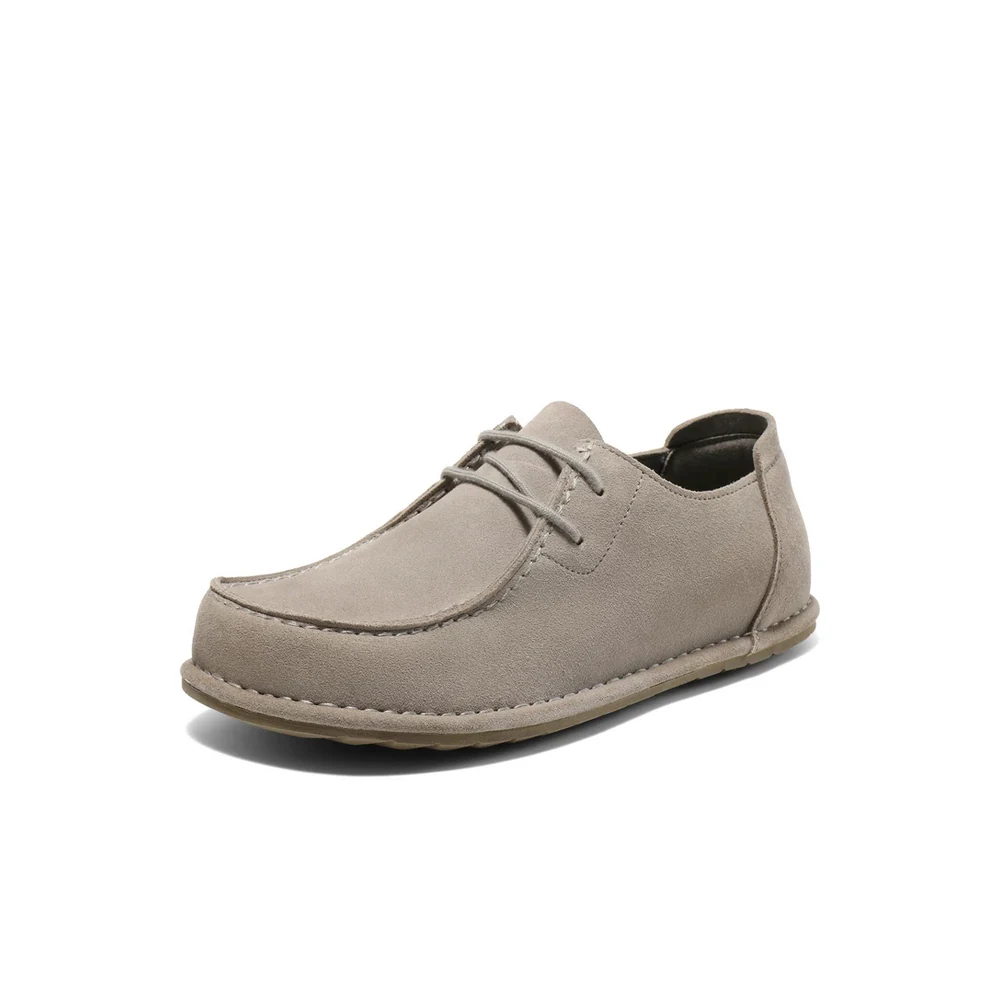
Conclusion: Partnering for Long-Term Supply Chain Reliability
For footwear brand executives and sourcing managers, mitigating supply chain risk depends entirely on partnering with a reliable shoes factory that possesses deep engineering capabilities rather than surface-level assembly capacity. By standardizing hide selection, chemical retanning, spectrophotometric color control, and rigorous physical laboratory testing, Heshan City Shark Imperator Footwear Trading Co., Ltd. delivers consistent, high-margin cow suede collections that scale seamlessly from prototype to mass production.
Are you currently evaluating manufacturing partners for your upcoming Spring/Summer or Autumn/Winter footwear lines? Connect with our technical export team today to request our complete material swatch books and laboratory testing certification reports.